Nhà phân phối & Nhà nhập khẩu
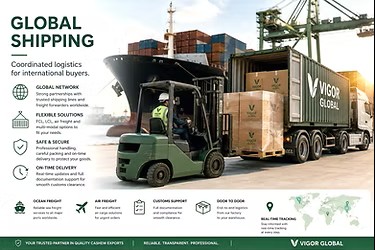
Nguồn cung xuất khẩu ổn định với bao bì linh hoạt và hệ thống hậu cần toàn cầu được điều phối hiệu quả.
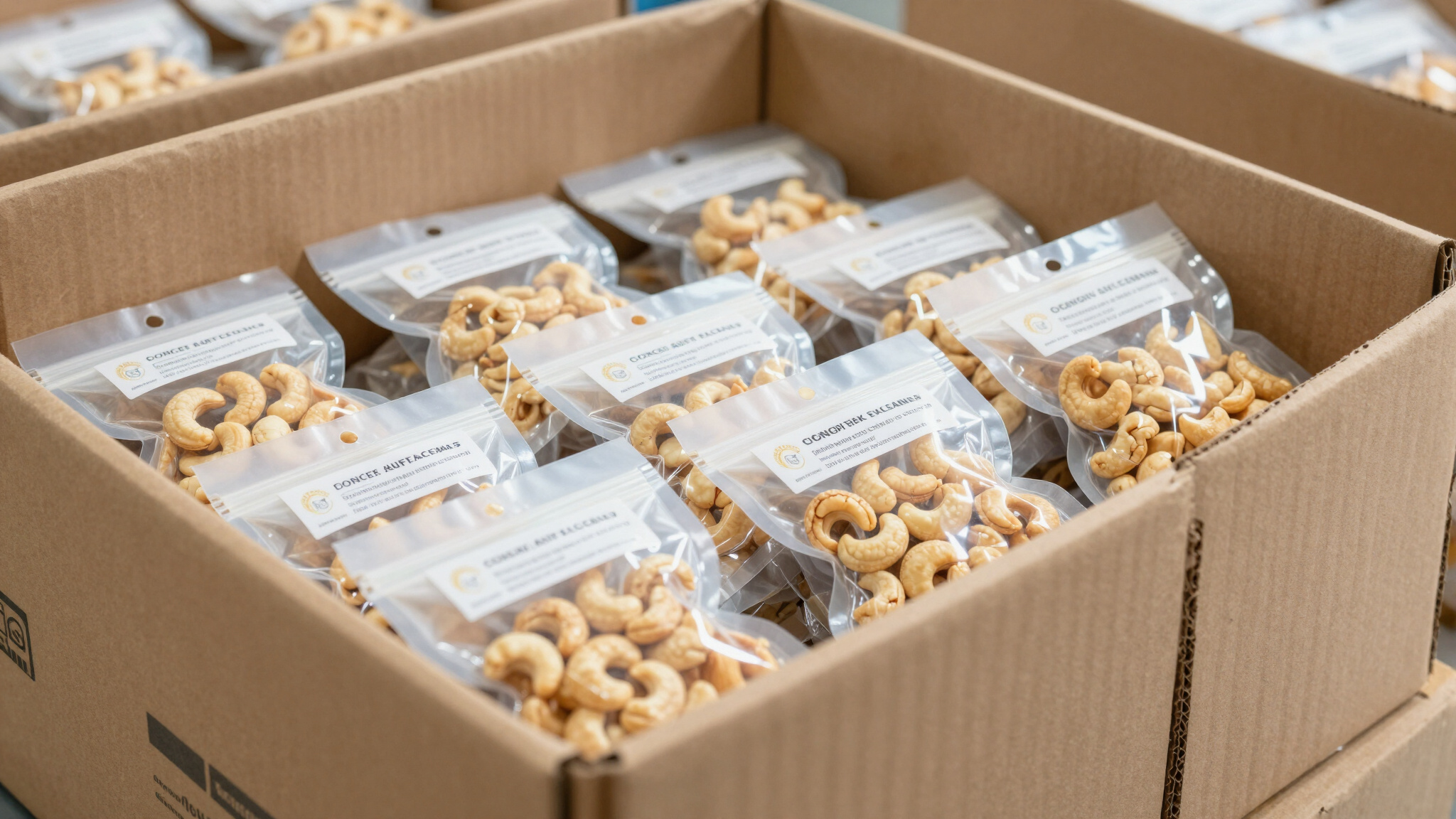
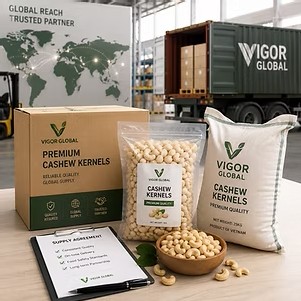
Preserving the quality of cashew kernels during long transit times—often spanning weeks across different climate zones—requires robust packaging standards. Cashews are highly susceptible to moisture absorption, oxidation, and physical breakage, making proper packaging a critical element of international trade.
The global cashew trade primarily utilizes two main packaging formats to ensure product integrity from the processing facility in Vietnam to destinations in Europe, North America, or the Middle East:
This is the most modern and widely accepted packaging method. The cashews are placed inside high-barrier, multi-layer foil pouches. The air is evacuated (vacuumed), and often flushed with Carbon Dioxide (CO2) or Nitrogen before heat sealing.
A traditional method that is still preferred by specific markets, particularly in the Middle East.
The secondary packaging is just as important. Export cartons must be constructed from heavy-duty, double-wall corrugated cardboard to withstand stacking pressure in shipping containers. Furthermore, proper palletization with shrink wrapping and edge protectors ensures that the cargo remains stable during sea freight, minimizing the risk of the ‘crushing effect’ on the bottom layers.
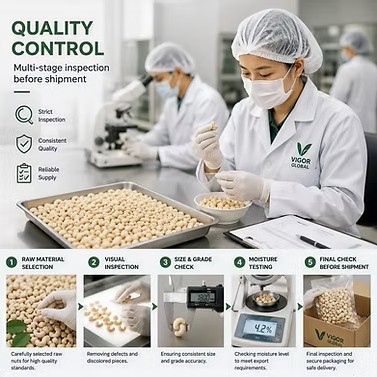
Export packaging must comply with the labeling requirements of the destination country, including clearly printed grades, origin, net weight, processing date, and lot numbers for complete traceability.
Nguồn cung xuất khẩu ổn định với bao bì linh hoạt và hệ thống hậu cần toàn cầu được điều phối hiệu quả.
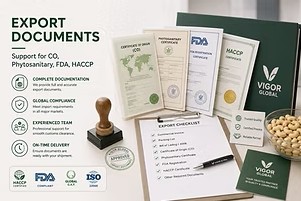
Hỗ trợ về mặt giấy tờ để đảm bảo quy trình hải quan và tuân thủ pháp luật diễn ra suôn sẻ.
Điều phối xuất khẩu đáng tin cậy từ Việt Nam đến các điểm đến toàn cầu.